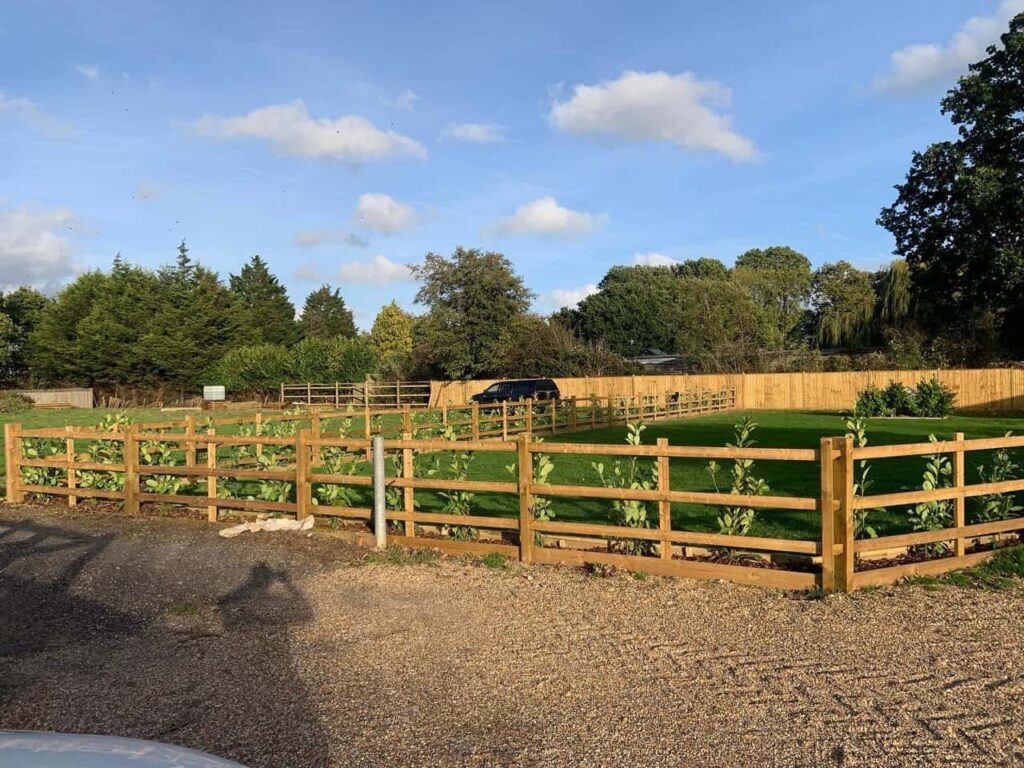
What Makes Post and Rail Fencing Popular for Open Boundaries?
Not every boundary needs to provide complete privacy or create a solid visual barrier. Where the aim is to define an open space while retaining a sense of visibility and connection with the surrounding landscape, post and rail fencing can be an excellent solution.
Its straightforward construction, consisting of sturdy posts connected by horizontal rails, creates a clearly defined boundary without making an outdoor area feel unnecessarily enclosed. This combination of practicality and understated appearance is one of the main reasons post and rail fencing continues to be chosen for larger gardens, open plots and spacious boundaries.
For property owners in Sheppey, Kent, Fast Fix Fencing Sheppey provides professionally installed fencing designed around the individual characteristics and practical requirements of each site.
What Is Post and Rail Fencing?
Post and rail fencing is constructed using vertical posts positioned at suitable intervals with horizontal timber rails running between them.
Unlike solid fence panels, the design intentionally leaves open spaces between the rails. The result is a strong visual boundary that maintains views through the fence.
Its relatively simple appearance is part of its appeal. Rather than dominating an outdoor area, post and rail fencing can sit naturally within open surroundings.
Why Does It Work So Well for Open Boundaries?
Large or open spaces can require clear definition without necessarily needing a tall, solid fence.
Installing continuous solid panels along an extensive boundary can significantly change the character of the area. Post and rail fencing takes a lighter approach.
It provides a recognisable division between spaces while retaining:
- Open views
- Natural light
- A spacious appearance
- Visual connection between different areas
- A traditional, understated character
This makes it particularly useful where enclosure is required but complete screening is not the priority.
1. It Clearly Defines the Boundary
One of the fundamental purposes of any fence is to create a clear physical division.
Post and rail fencing does this without excessive visual weight. The continuous line created by the posts and rails makes the edge of the space immediately recognisable.
This can help bring structure to an otherwise open outdoor area and create a more organised appearance.
2. It Preserves a Sense of Space
A solid fence naturally blocks the view beyond it. In smaller enclosed gardens, this can be useful for privacy, but on an open boundary it may make the space feel more restricted.
Post and rail fencing allows the eye to travel through and beyond the fence.
As a result, the boundary remains clearly defined without visually reducing the size of the surrounding area.
For properties in Sheppey, Kent, where maintaining an open character is important, this can be a significant advantage.
3. It Has a Simple, Natural Appearance
Some fencing styles are intended to become prominent garden features. Post and rail fencing generally takes the opposite approach.
Its straightforward timber construction provides a natural appearance that works particularly well where homeowners or property owners do not want the boundary to dominate the landscape.
The repetitive arrangement of posts and rails creates clean lines while maintaining an informal character.
This makes it suitable for outdoor spaces where subtle boundary definition is preferable to heavy screening.
4. It Can Cover Long Boundary Runs Effectively
Long boundaries need careful consideration.
The greater the length of a fence, the greater its visual impact on the surrounding space. A design that works perfectly across a small garden can feel overwhelming when repeated over a much longer distance.
Post and rail fencing is particularly effective across extended runs because of its open construction.
The spacing between rails prevents the boundary from appearing like a continuous wall, while the repeated post-and-rail pattern creates consistency from one section to the next.
5. It Can Follow the Character of the Ground
Open boundaries are not always perfectly level.
Changes in ground height and natural variations in the landscape can make fencing installation more complicated. Post and rail fencing can often be planned to work effectively with these conditions.
Correct positioning of the posts and careful installation of the rails allow the fence to respond to the individual site.
Professional assessment remains important because ground conditions and changes in level can influence how the fence should be constructed.
6. It Creates Definition Without Blocking Light
Solid boundaries can influence how sunlight reaches different parts of an outdoor space.
Because post and rail fencing remains largely open between the horizontal rails, it has much less impact on available light.
This can be useful where planting, lawns or other landscape features extend close to the boundary.
It also helps retain the bright, open feeling that makes larger outdoor spaces appealing in the first place.
7. It Works Well as Part of a Wider Landscape
Good fencing should complement the area around it rather than simply divide it.
Post and rail fencing can provide a useful visual framework for:
- Lawns
- Open garden areas
- Planting
- Paths
- Large outdoor spaces
- Defined sections within a property
Its simple construction means other landscape features can remain the main focus.
Can Post and Rail Fencing Provide Greater Enclosure?
Traditional post and rail fencing is deliberately open, so it does not provide the same degree of enclosure as a solid panel fence.
However, where the site requires additional containment, the fencing design can sometimes be combined with suitable supplementary materials while retaining the characteristic post and rail appearance.
The appropriate specification depends on what the boundary needs to achieve.
This is why determining the practical purpose of the fence before installation is important. A boundary intended primarily for visual definition may require a different arrangement from one where containment is a greater priority.
Choosing the Right Number and Position of Rails
Post and rail fencing can be configured differently according to the intended application.
The number of horizontal rails, their spacing and the overall proportions of the fence all influence both appearance and functionality.
Rather than treating every open boundary identically, the design should consider:
The Purpose of the Fence
Is the primary objective to define the boundary, separate different outdoor areas or provide additional enclosure?
The Scale of the Site
The proportions should suit the size and character of the surrounding space.
Ground Conditions
Changes in level can influence post positioning and rail installation.
Overall Appearance
The finished fence should look balanced across the complete boundary.
These details can make a substantial difference to the quality of the finished installation.
Strong Posts Are Fundamental
Although post and rail fencing looks relatively simple, its performance depends heavily on how it is installed.
The posts form the structural foundation of the entire fence. They need to be correctly positioned, appropriately spaced and securely installed.
Poorly installed posts can eventually result in leaning sections or rails becoming misaligned.
Careful groundwork at the installation stage helps create a boundary that remains straight, secure and visually consistent.
Gates Can Be Incorporated into the Design
Open boundaries often require access for people, garden equipment or other regular movement through the site.
A suitable gate can be incorporated so that access feels like a deliberate part of the fencing rather than an afterthought.
The position of the gate should take account of how the space is used. Locating access logically can make the entire boundary more practical while maintaining a consistent appearance.
Why Professional Installation Matters
Post and rail fencing may have a simple design, but achieving a professional result requires accurate setting out and consistent workmanship.
Long fence runs can make even small alignment errors increasingly noticeable. Post spacing, rail positioning, ground levels and changes of direction all need careful consideration.
At Fast Fix Fencing Sheppey, we assess the individual boundary before determining the most suitable installation approach. This allows the fencing to be planned around the site’s dimensions, ground conditions and intended use rather than relying on a one-size-fits-all solution.
Is Post and Rail Fencing Right for Your Property?
Post and rail fencing is particularly worth considering when the main objective is to create a clear boundary while retaining an open appearance.
It may be suitable where you want:
- Clear separation between outdoor areas
- Minimal interruption to surrounding views
- A traditional timber appearance
- A boundary that does not dominate the landscape
- Consistent fencing across a longer distance
- A practical design that complements open surroundings
Where complete privacy is the main objective, a more enclosed fencing style is likely to be appropriate. Choosing fencing according to the actual purpose of the boundary helps ensure a more satisfactory result.
Conclusion
Post and rail fencing remains popular for open boundaries because it provides effective definition without creating the visual weight of a continuous solid fence. Its open construction helps preserve views, natural light and a sense of space, while its straightforward timber design can complement the character of larger outdoor areas.
The quality of the installation is just as important as the fencing style itself. Correct post positioning, consistent rails and careful planning around ground conditions all contribute to a strong, neat and dependable finished boundary.
For property owners in Sheppey, Kent, Fast Fix Fencing Sheppey provides professional post and rail fencing installations tailored to individual sites. If you are looking for a practical way to define an open boundary while retaining its spacious character, contact our team to discuss a fencing solution suited to your property.
Call us on: 01795 718 997
Click here to find out more about Fast Fix Fencing Sheppey
Click here to complete our contact form and see how we can help with your fencing needs.